To enhance your browsing experience on our website, we utilize cookies. For more detailed information regarding our use of cookies, kindly refer to our privacy policy.
To enhance your browsing experience on our website, we utilize cookies. For more detailed information regarding our use of cookies, kindly refer to our privacy policy.

Executive Summary For years, outsourcing has been the dominant model for global operations. It delivered scale, efficiency, and cost optimization. Yet as enterprises deepen their digital ambitions, they are increasingly asking for something outsourcing alone cannot offer - control, transparency, and capability ownership. At the same time, Global Capability Centers (GCCs) once seen as cost-effective offshore back offices have evolved into strategic hubs driving analytics, transformation, and innovation. Sitting at the intersection of these trends is a model gaining momentum: JV-based outsourcing with a structured Build-Operate-Transfer (BOT) pathway. This model forms a co-owned entity between the enterprise and the IT service provider, where operations are jointly governed often with the client appointing the CEO and the provider appointing the CFO ensuring alignment, transparency, shared accountability, and strategic continuity. This structure is proven.The HCL-State Street JV scaled to thousands of employees before transitioning fully to State Street ownership, with HCL continuing as long-term strategic partner. TCS and Nielsen, WNS and Aviva, and Infosys and Temasek have followed similar paths demonstrating that when governance and scale intent are well structured, JV-based outsourcing can evolve into high-performing GCCs that continue relying on the original provider even post-transition. Why Organizations Choose the JV Route Enterprises today seek: Control over core processes and data Cost transparency Influence over talent and technology decisions The ability to build internal capability gradually A pathway to eventual full ownership The JV model enables GCC creation without the risk and effort of building from scratch. Strategic influence from Day 1 (board & leadership representation) Rapid scale using the provider's talent and delivery ecosystem Predictable cost structures and efficiency gains Clear path to buyout and internalization when mature Cultural and transformational alignment over time 7-15+ years of relationship stability Embedded strategic relevance (vs. transactional outsourcing) Transformation, consulting, platform & managed services revenue Significant equity value realization at buyout Preferred supplier position post-transition Effectively, the provider becomes a co-creator not just a vendor. JV Works only when Designed and Governed well Ownership Models
Control is shaped more by governance (board rights, reserved matters, CEO/CFO ratio) than equity share alone
Revenue and Profit Consolidation If the provider does not hold a majority share, they would not be able to consolidate the revenue. So, entity structuring would be essential to address this concern. JV Works When: There is a long-term scaling roadmap Transformation not just operations is in scope Both parties align on investment philosophy Leadership continuity supports joint governance JVStruggles When: The scope is too narrow to scale The deal is driven purely by cost savings Governance is unclear Margin protection is not contractually structured Scale is the economic engine. A JV that scales to 1,000+ employees becomes a strategic asset with enterprise value. Lifecycle Snapshot Buyouts can reduce long-term run-rate revenue but: Scale revenue is secure in the growth phase Transformation and consulting revenue increases Equity exit generates significant capital value Provider often remains long-term strategic partner post-buyout This is not revenue loss it is value shift: From transaction volume to strategic value creation and equity monetization. Define strategic capability goals Assess control vs outsourcing comfort Confirm cultural alignment with provider Commit to scale roadmap (3 - 7 years) Align upfront on buyout timing and valuation method Service Providers Should: Anchor pricing on transparent cost models Lock margin floors & indexation protections Apply transfer pricing for IP/platform usage Evaluate total value: services + transformation + equity exit A JV succeeds only if it is financially and strategically balanced for both parties. JV-based outsourcing is not just another delivery model. It represents a strategic evolution, one that blends the speed and scale of service providers with the control and capability aspirations of GCCs. When thoughtfully designed and jointly governed, JVs create lasting value. Stronger operational resilience Deeper talent capability Transformational readiness Shared long-term success The organizations that embrace co-creation today will be the ones defining competitive advantage tomorrow.Co-Creating the Future: Why JV-Based Outsourcing is Emerging as the Next Evolution of GCC Strategy
For the Global Enterprise (GCC Builder), JV Offers:
For the IT Services Provider, JV Offers:
The Economics: When JV Works and When It Doesn't
The Service Provider Dilemma: "Should We Do This?"
Evaluating Fit Enterprises Should:
Closing Note
Dear Readers,
Thank you for the strong response to our previous edition, "Tapping Germany’s Mittelstand: India’s Next Growth Gateway Beyond the US" . The conversations it sparked reinforced our belief in India’s growing role in global transformation.
Theme of the Month:
“Co-Creating the Future: Why JV-Based Outsourcing is Emerging as the Next Evolution of GCC Strategy”
We are seeing a notable shift in the market: while GCC setups continue to expand in India, many global enterprises entering the region are opting for JV or Build–Operate–Transfer (BOT) models to balance control with execution maturity. This approach allows them to leverage the talent, infrastructure, and delivery expertise of Indian IT service providers—while still shaping culture, governance, and capability direction.
However, success in this model requires clarity:
When does co-creation work, and for whom?
How should governance and pricing be structured?
What are the risks if scale or commitment is weak?
This month’s feature breaks down these questions for large, mid-size, and emerging IT service providers, and for global organizations exploring India as a strategic capability location.
We look forward to your perspectives. Join the conversation with us on LinkedIn—or reach out to discuss how such models could support your growth strategy.
Warm regards,
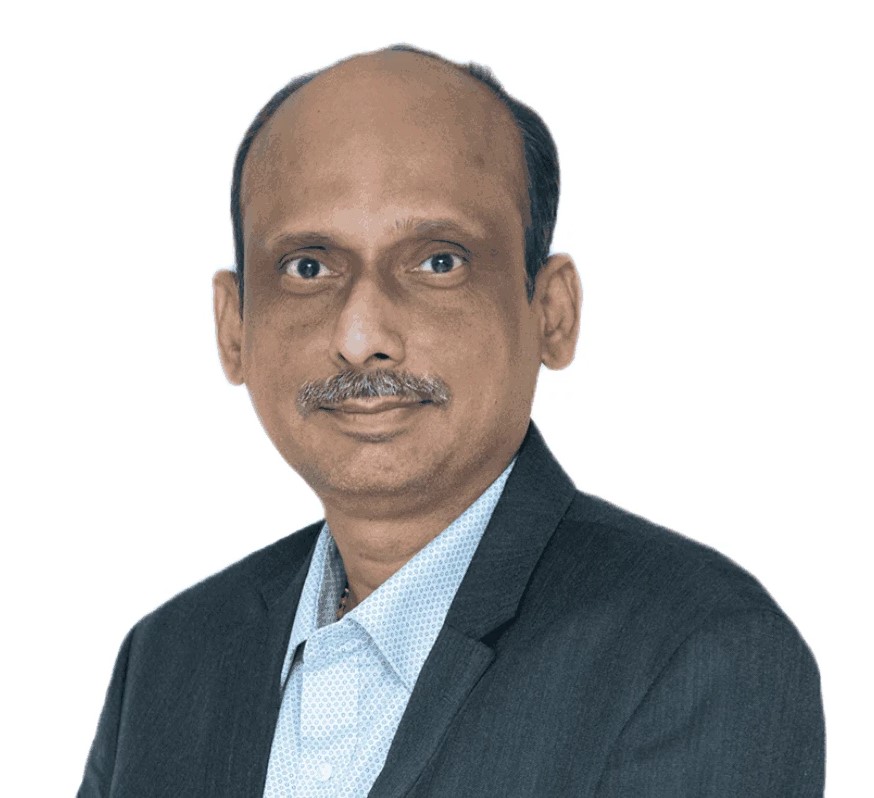
Subbu
Author,
CFO Partner, CFO Bridge



Answer a few questions and get matched with experts who’ve helped 500+ businesses like yours.
CEO Description
Here's a curated list of finance leaders for your industry and company size.
Finding your perfect CFO partners...


Our talented team will reach you out shortly.
Let's talk! Book your free consultation today


 India
India USA
USA UAE
UAE